
You can find all of your Questions here
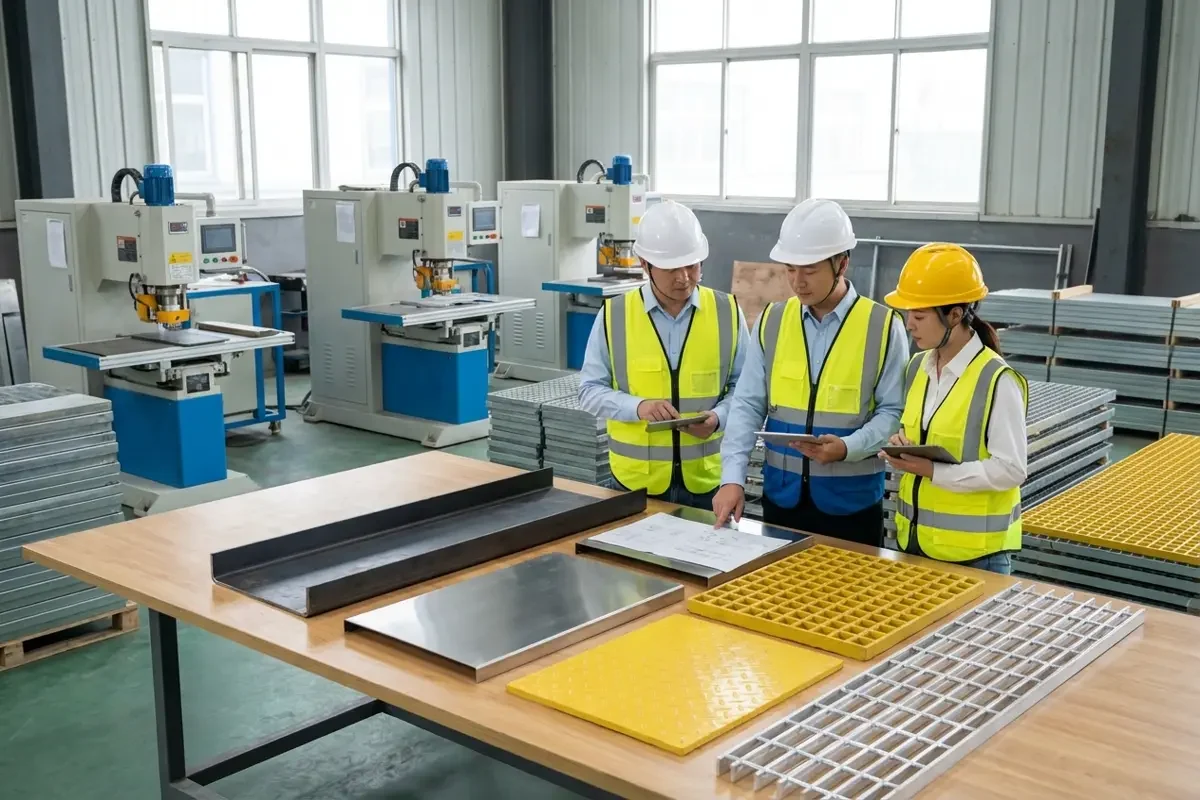
Table of Contents
Frequently Asked Questions
How do I select the right steel grating specification based on load and environment?
Selection begins with defining the load type (e.g., pedestrian traffic, light vehicles, or heavy-duty trucks) and the unsupported span.
Pedestrian walkways: Typically utilize the G325/30/100 model (3mm or 5mm bearing bar thickness).
Heavy-duty areas: Require increased bearing bar height and thickness (e.g., G505).
Environmental factors: For dry indoor settings, cold galvanizing or painting is sufficient. However, for outdoor, humid, or marine environments, Hot-Dip Galvanizing (HDG) is highly recommended to ensure long-term corrosion resistance.
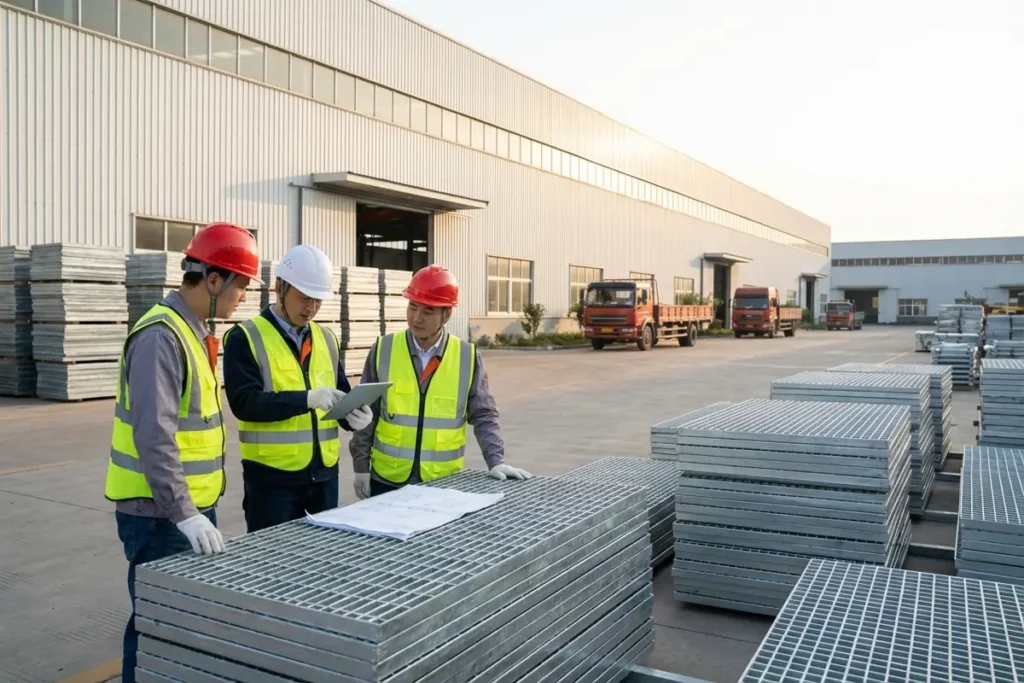
What are the typical applications for steel grating?
Steel grating is widely used for industrial platforms, maintenance walkways, Stair Treads, Trench Covers, and fencing. It is the preferred alternative to traditional concrete or checkered plates in sectors such as petrochemicals, power plant desulfurization, sewage treatment, and large-scale logistics centers due to its superior ventilation, light penetration, anti-slip properties, and ease of maintenance.
Which production standards does Shunbo Steel Grating follow?
We strictly adhere to the Chinese National Standard YB/T 4001.1-2019. For international projects, our products fully comply with ASTM A1011, ANSI/NAAMM (MBG 531), and BS 4592. All raw material bearing bars are sourced from high-quality GB/T 700 Q235B carbon steel or specified stainless steel grades to ensure structural integrity.
What is the difference between Hot-Dip Galvanizing and Cold Galvanizing?
Hot-Dip Galvanizing (HDG): The steel is submerged in molten zinc at approximately 500°C. This creates a thick metallurgical bond (typically $\ge 65\mu m$), offering extreme durability with a service life of 20–50 years in outdoor environments.
Cold Galvanizing (Electro-galvanizing): Applies a thin zinc layer via electrolysis. While cost-effective, its corrosion resistance is limited, making it suitable only for low-exposure indoor applications.
What is the typical lead time for standard products?
Standard Specifications: For common sizes (e.g., G325/30/100) without complex cutouts, the lead time is 7–10 working days.
Custom Projects: Orders requiring bespoke CAD design, intricate geometric cutting, or high volumes (e.g., >10 containers) typically take 15–25 days. We recommend early consultation during the project planning phase to optimize the production and logistics schedule.
Is there a Minimum Order Quantity (MOQ)?
Shunbo offers flexible ordering options. While there is no rigid MOQ, we recommend a minimum of 50–100 square meters (approx. 1–2 tons) to optimize shipping costs and production efficiency. We also provide an “express lane” for sample orders to help clients verify our quality and compatibility.
Do you support customized shapes and detailed engineering design?
Yes. Our engineering team utilizes CAD and Tekla Structures to assist clients. By providing site layouts or basic dimensions, we can provide:
Layout and nesting optimization.
Load-bearing calculations.
Detailed installation drawings. We use automated precision machinery to pre-fabricate circular cutouts, fan-shaped platforms, and pipe penetrations in-factory, significantly reducing on-site labor.
What quality inspections are performed before delivery?
Our QC process covers the entire lifecycle from raw materials to final shipping. Key inspections include:
Raw material tensile testing.
Weld integrity tests (destructive testing).
Coating thickness measurement (using digital gauges).
Dimensional tolerance verification. For major projects, we provide Third-Party Inspection (TPI) reports from SGS or BV, alongside comprehensive Mill Test Certificates (MTC).
What are your warranty and after-sales policies?
We provide a 1-year anti-corrosion warranty for hot-dip galvanized products (subject to specific environmental conditions). In the event of transit deformation or coating damage, we provide immediate remedial solutions or replacement parts. Our technical team also offers remote installation guidance to ensure project success.
How do you ensure safe packaging and loading for export?
For international shipments, we use steel strapping combined with wooden or steel pallets to ensure easy forklift handling and prevent deformation. During container loading, we employ scientific weight distribution and heavy-duty tie-downs to prevent shifting during maritime transit, ensuring your cargo arrives in pristine condition.
Technical Guide: Carbon Steel vs. Stainless Steel Grating – Material Selection & Performance
What are the primary differences?
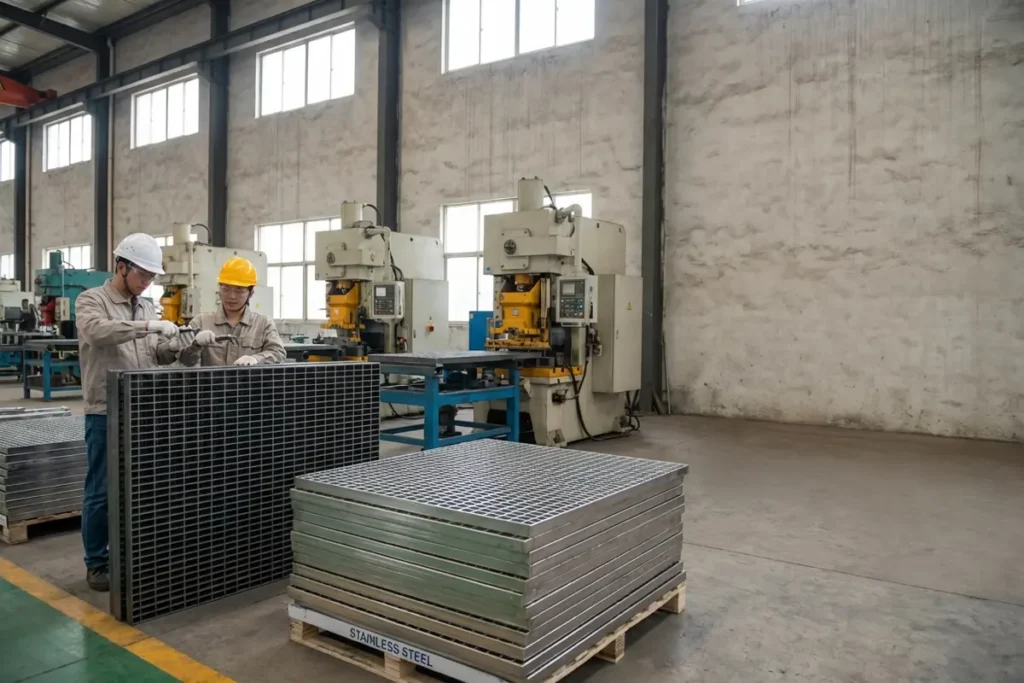
Carbon Steel Grating is prized for its high structural strength and cost-efficiency. When treated with hot-dip galvanizing, it performs exceptionally well in general industrial and construction settings. Stainless Steel Grating is renowned for its superior corrosion resistance and hygienic properties. It is the definitive choice for harsh acidic/alkaline environments or the food and pharmaceutical industries. While the initial investment is higher, its long-term maintenance-free nature provides significant lifecycle value.
Common Material Grades
Carbon Steel: Primarily Q235B (equivalent to ASTM A36), offering an ideal balance of weldability and structural strength.
Stainless Steel: * SS304: General-purpose corrosion resistance.
SS316: Enhanced resistance to chloride corrosion, ideal for marine environments.
SS316L: Low-carbon variant with superior resistance to intergranular corrosion.
Differences in Welding Processes
Carbon steel gratings are typically produced via automated high-pressure resistance welding, where crossbars are fused into the bearing bars to create a single, robust structure. While stainless steel can also be pressure-welded, high-standard custom projects often utilize Argon Arc Welding (TIG) or manual full welding to ensure bright, pore-free joints that maintain full corrosion resistance and aesthetic appeal.
Surface Treatment Characteristics
Carbon Steel: The industry standard is Hot-Dip Galvanizing, creating a rugged zinc-iron alloy layer.
Stainless Steel: Usually undergoes Pickling & Passivation to remove scale and form a dense protective oxide film with a matte silver finish. For architectural applications, Electropolishing can be used to achieve a mirror-like shine that is easier to sanitize.
Ensuring Anti-Slip Performance
Both materials can be manufactured with Serrated Bearing Bars. The serrated surface significantly increases the friction coefficient, which is critical for preventing slips in areas prone to oil, water, or ice. In offshore platforms and oil & gas projects, serrated grating is a mandatory safety configuration.
Temperature Resistance Comparison
Carbon steel experiences a significant drop in strength at temperatures exceeding 400°C. In contrast, stainless steel offers excellent stability in both extreme heat and cold. SS304/316 maintains mechanical integrity up to 800°C and remains ductile in cryogenic conditions (such as LNG applications), whereas carbon steel would suffer from cold brittleness and fracture.
Maintenance Requirements
Galvanized Carbon Steel: Virtually maintenance-free; requires only periodic checks for mechanical damage to the zinc coating.
Stainless Steel: While it does not rust, regular rinsing with clean water or neutral detergents is recommended in food-grade environments to prevent the accumulation of chlorides or iron dust, which can compromise the passivation film.
Quality Assurance & Documentation
Each shipment includes a Mill Test Certificate (MTC) detailing chemical composition ($C, Si, Mn, P, S, Ni, Cr$) and physical properties. For stainless steel orders, we offer Positive Material Identification (PMI) testing via handheld spectrometers to ensure 100% grade accuracy and prevent material substitution.
Evaluating Life Cycle Cost (LCC)
While the initial purchase price of carbon steel is significantly lower, it may require de-rusting, repainting, or replacement every few years in highly corrosive environments. Stainless steel, despite a 3–4x higher initial cost, can last over 30 years without maintenance. In harsh conditions, the LCC of stainless steel is often much lower than that of carbon steel.
When is Stainless Steel Mandatory?
Stainless steel is the non-negotiable choice for:
Food & Pharma: High hygiene standards and frequent chemical washdowns.
Corrosive Chemical Zones: Constant exposure to acids and alkalis.
Marine/Offshore: High salt-spray environments.
Cleanrooms: Requirements for zero dust and non-magnetic properties.
Architectural Design: Specific requirements for premium visual texture.
Lightweight and Corrosion-Resistant Solutions: A Comprehensive Comparison of FRP and Aluminum Gratings
What are the weight advantages of FRP and Aluminum compared to steel?
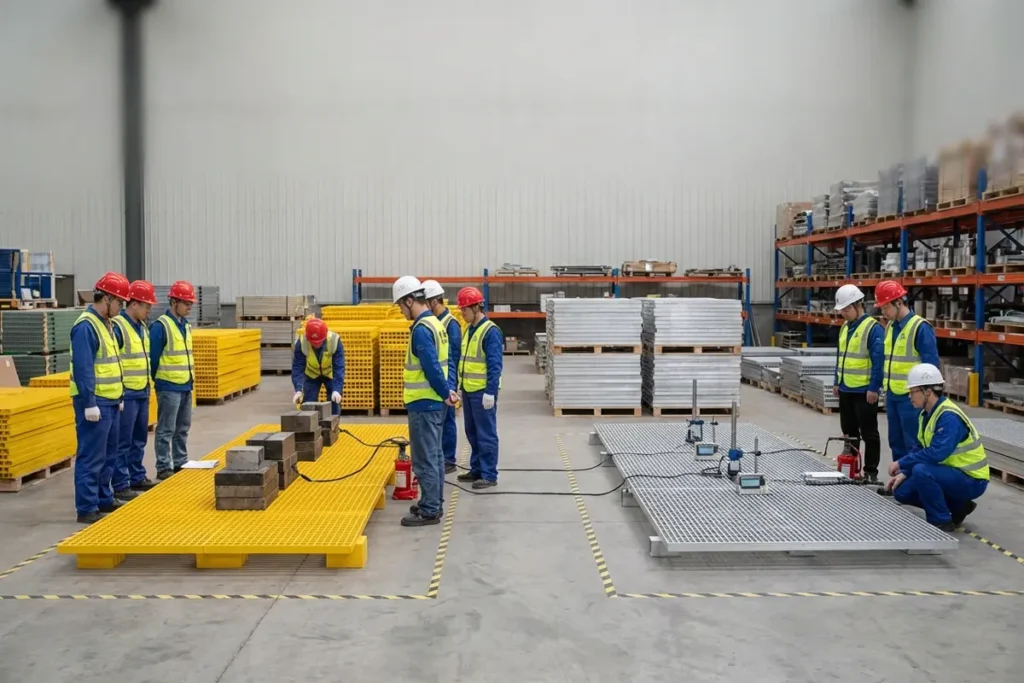
Aluminum grating has a density only 1/3 that of steel, combining lightweight properties with high strength. Fiberglass Reinforced Plastic (FRP) is even lighter, at approximately 1/4 the weight of steel and 70% the weight of aluminum. Both materials significantly reduce structural load and eliminate the need for heavy lifting equipment during installation—two people can easily handle panels, which substantially lowers transportation and labor costs.
How do they perform in terms of corrosion and chemical resistance?
FRP is the “king of corrosion resistance.” By selecting different resin bases (Orthophthalic, Isophthalic, or Vinyl Ester), it can withstand various strong acids, alkalis, and organic solvents without ever rusting. Aluminum grating relies on a naturally occurring oxide film for excellent resistance to atmospheric and seawater corrosion but is not resistant to strong alkalis. Therefore, FRP is chosen for extreme chemical plants, while aluminum is preferred for marine and architectural fields.
What are the considerations for electrical conductivity and fire safety?
FRP is an excellent insulator, non-magnetic, and non-sparking upon impact, making it the ideal choice for substations and explosive environments. Aluminum has high electrical and thermal conductivity but is also non-sparking, often used in oil depots and refineries where explosion-proofing is required but insulation is not. For fire safety, FRP requires the addition of fire retardants to meet ASTM E84 Class 1 flame spread standards.
How is the UV resistance for outdoor use?
Aluminum possesses natural UV resistance and will not become brittle or age under long-term sunlight. For outdoor FRP applications, we incorporate UV inhibitors into the resin and create a resin-rich surface layer to prevent fiber blooming and chalking. High-quality FRP grating can have a service life of over 20 years outdoors while maintaining vibrant, high-visibility colors.
Are there special requirements for installation?
FRP and aluminum gratings are typically secured using M-clips or C-clips made of stainless steel. This avoids the safety hazards of “hot work” (welding). A major advantage of FRP is the ease of field-cutting; panels can be resized using portable saws without needing edge-banding (though sealing cut edges with resin is recommended). For aluminum, simple deburring is suggested after cutting.
Does the coefficient of thermal expansion affect installation?
Both FRP and aluminum have different thermal expansion coefficients than steel, with aluminum’s being particularly high. When laying large areas, sufficient expansion joints (typically a 5-10mm gap at specific intervals) must be reserved to prevent arching or compression deformation caused by temperature fluctuations. Our design team clearly marks the positions of these joints in the layout drawings.
Is daily maintenance difficult?
Maintenance is virtually zero. Neither FRP nor aluminum requires periodic painting or anti-corrosion treatments like carbon steel. FRP is stain-resistant and can be manufactured in safety colors (such as bright yellow or green) that maintain their warning effect long-term; dirt can simply be washed away with water. Aluminum has a smooth surface with excellent self-cleaning properties. This maintenance-free nature is vital for hard-to-reach high-altitude or offshore facilities.
What are the typical application industries?
FRP is primarily used in electroplating plants, wastewater treatment, paper mills, chemical plants, and offshore drilling platforms. Aluminum grating, known for its metallic texture and lightness, is frequently used for architectural curtain walls, suspended ceilings, municipal sewage plants, and commercial walkways where aesthetics are prioritized. Both are widely used in engineering projects requiring reduced structural weight.
What specific standards apply to FRP grating?
Premium FRP grating must comply with ASTM E84 (Surface Burning Characteristics, with a flame spread index under 25 for Class 1) and ASTM D635 (Rate of Burning). Regarding mechanical properties, they must meet specific deflection requirements (typically safe load at 1% of the span). Shunbo’s FRP products undergo rigorous testing against these standards.
How should cost-effectiveness be evaluated?
On a per-unit basis, FRP and aluminum are generally more expensive than ordinary carbon steel. However, when considering the absence of maintenance costs, savings on installation labor, and a longer service life, their comprehensive cost-effectiveness is extremely high. For corrosive environments, FRP is recognized as the most cost-effective solution. For projects pursuing aesthetics and lightweight design, aluminum provides excellent value for the investment.
Global Procurement Guide: Steel & Composite Grating
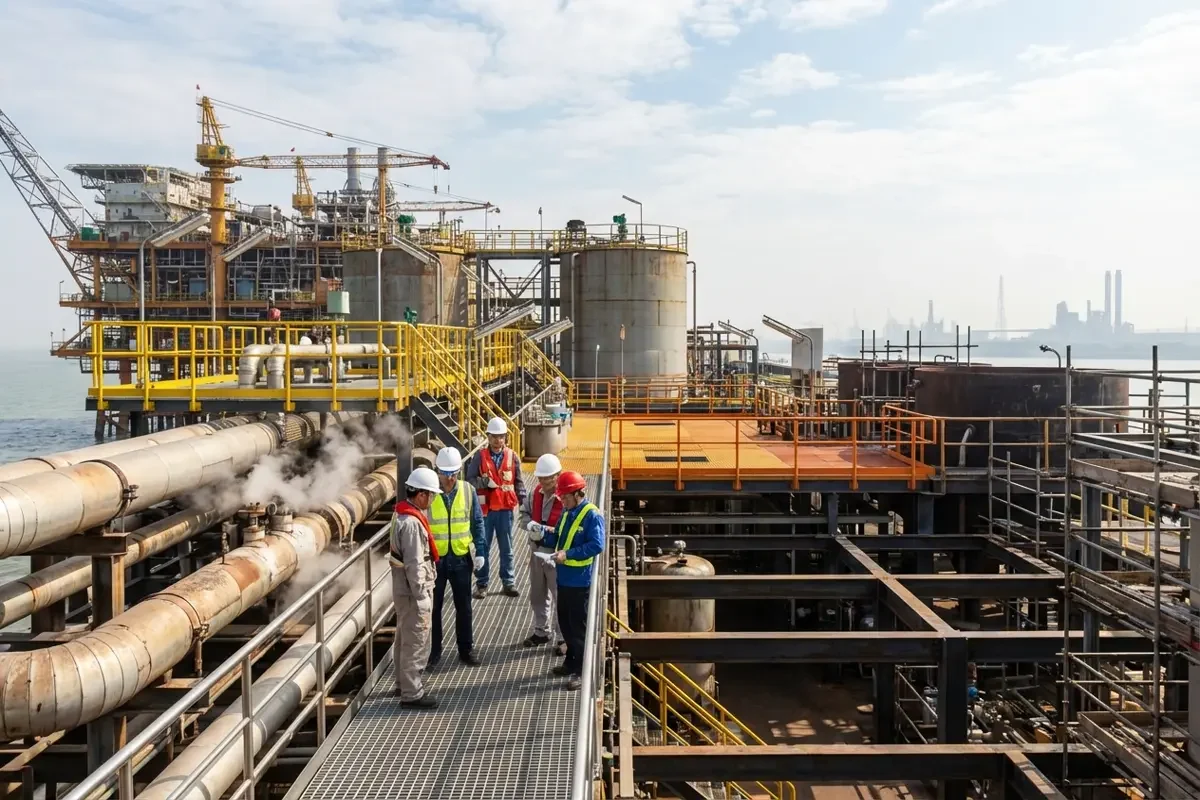
A Comprehensive Technical Manual for Selection, Engineering, and Application
This guide provides a technical roadmap for selecting industrial gratings across carbon steel, stainless steel, aluminum, and FRP materials. By analyzing load capacities, environmental corrosion, and material properties, we help engineers and procurement teams balance structural integrity, safety standards, and cost-efficiency to ensure the optimal solution for any global infrastructure project.
Section I: Carbon Steel Grating – The Industrial Standard
Focusing on load-bearing efficiency and cost-effective structural solutions.
1.1 Specification Selection
Selection begins with defining the load type (pedestrian, light vehicles, or heavy-duty trucks) and the unsupported span.
Pedestrian walkways: Use G325/30/100 (3mm/5mm bar).
Heavy-duty: Increased bar height/thickness (e.g., G505).
Environment: Indoor uses cold galvanizing; outdoor/marine requires Hot-Dip Galvanizing (HDG).
1.2 Typical Applications
Widely used for industrial platforms, maintenance walkways, Stair Treads, Trench Covers, and fencing in petrochemicals, power plants, and logistics centers due to ventilation and anti-slip properties.
1.3 Production Standards
We adhere to YB/T 4001.1-2019, ASTM A1011, ANSI/NAAMM (MBG 531), and BS 4592. Raw materials are high-quality GB/T 700 Q235B or specified stainless steel.
1.4 Galvanization: Hot-Dip vs. Cold
Hot-Dip (HDG): Thick metallurgical bond ($\ge 65\mu m$), 20–50 year lifespan outdoors.
Cold (Electro): Thin layer, lower cost, suitable only for low-exposure indoor environments.
1.5 Lead Times
Standard: 7–10 working days.
Custom/Bespoke: 15–25 days depending on CAD complexity or volume (>10 containers).
1.6 Minimum Order Quantity (MOQ)
Flexible ordering. Recommend 50–100 $m^2$ (1–2 tons) for shipping efficiency. Express lanes available for sample orders.
1.7 Engineering & Customization
We utilize CAD and Tekla Structures for layout optimization, load calculations, and pre-fabricating circular/fan-shaped cutouts to reduce site labor.
1.8 Quality Control (QC)
Includes raw material tensile tests, weld integrity checks, digital coating thickness measurement, and dimensional verification. SGS/BV TPI and MTC reports available.
1.9 Warranty & After-Sales
1-year anti-corrosion warranty for HDG. Immediate remediation for transit damage. Remote installation guidance provided.
1.10 Export Packaging
Steel strapping on wood/steel pallets. Scientific weight distribution and tie-downs ensure cargo integrity during maritime transit.
Section II: Stainless Steel Grating – Premium Performance
Focusing on extreme durability, hygiene, and life-cycle value.
2.1 Material Advantage
Carbon steel offers economy; Stainless Steel offers unmatched corrosion resistance for acidic/alkaline environments (food, pharma, chemical).
2.2 Material Grades
SS304: General corrosion resistance.
SS316/316L: Superior chloride resistance (marine/low-carbon).
2.3 Welding Techniques
Automated pressure welding for standard orders; TIG/Argon Arc Welding for high-standard custom projects to ensure pore-free, aesthetic joints.
2.4 Surface Treatments
Standard Pickling & Passivation for a matte silver finish; Electropolishing for a mirror-like, easy-to-clean shine.
2.5 Anti-Slip Safety
Serrated Bearing Bars are available to increase friction in oily or icy conditions. Mandatory for offshore/oil & gas safety.
2.6 Thermal Stability
Stainless steel maintains integrity from cryogenic (LNG) temperatures up to 800°C, whereas carbon steel fails above 400°C.
2.7 Maintenance
Stainless steel requires only periodic water rinsing to prevent chloride buildup, ensuring the passivation film remains intact.
2.8 Documentation
Every batch includes a Mill Test Certificate (MTC). PMI (Positive Material Identification) testing is available to verify chemical composition.
2.9 Life Cycle Cost (LCC)
Initial investment is 3–4x higher than carbon steel, but a 30-year maintenance-free lifespan makes it more economical in corrosive zones.
2.10 Mandatory Use Cases
Mandatory for food/pharma (hygiene), high-acid chemical zones, marine/salt-spray environments, and non-magnetic cleanrooms.
Section III: FRP & Aluminum – Lightweight Innovations
Focusing on easy installation, insulation, and specialized environments.
3.1 Weight Efficiency
Aluminum is 1/3 the weight of steel; FRP is 1/4. Both allow two-person handling without heavy lifting equipment, slashing labor costs.
3.2 Chemical Resistance
FRP is immune to rust and highly resistant to acids/solvents via resin selection (Vinyl Ester, etc.). Aluminum resists atmosphere/seawater but avoids strong alkalis.
3.3 Electrical & Fire Safety
FRP is an insulator (ideal for substations). Aluminum is conductive but non-sparking (ideal for refineries). FRP can meet ASTM E84 Class 1 fire ratings.
3.4 UV Stability
Aluminum is naturally UV-stable. FRP includes UV inhibitors and resin-rich layers to prevent “fiber blooming,” lasting 20+ years outdoors.
3.5 Installation & Cutting
Secured with M-clips/C-clips (no welding/hot work). FRP is easily field-cut with portable saws; aluminum requires simple deburring.
3.6 Thermal Expansion
Aluminum has a high expansion coefficient. Expansion joints (5-10mm) are required for large areas to prevent arching.
3.7 Zero-Maintenance
Neither requires painting. FRP comes in molded safety colors (yellow/green) that won’t fade. Aluminum is self-cleaning.
3.8 Typical Industries
FRP: Wastewater, plating, offshore rigs. Aluminum: Architectural facades, ceilings, and commercial walkways.
3.9 Specialized Standards
FRP complies with ASTM E84 (Flame Spread < 25) and ASTM D635 (Burn Rate), with mechanical loads tested to 1% span deflection.
3.10 Economic Evaluation
Higher per-unit cost than steel, but the highest Cost-Effective Solution for corrosive or weight-sensitive projects due to zero maintenance.
Conclusion
Choosing the right grating requires a holistic view of life-cycle value. While carbon steel remains the industrial workhorse, stainless steel and FRP offer indispensable durability in extreme environments. By adhering to international standards and leveraging innovative lightweight materials, Shunbo ensures long-term performance, reduced maintenance, and superior safety for modern industrial applications.