Industrial infrastructure projects require precise load calculations to ensure safety and longevity. Bar grating span tables serve as critical engineering references that determine the maximum unsupported distance between structural supports while maintaining load-bearing integrity. For facility managers, structural engineers, and procurement specialists, understanding these technical specifications is essential when specifying metal grating for platforms, walkways, and drainage systems.
Technical Fundamentals of Load Calculations
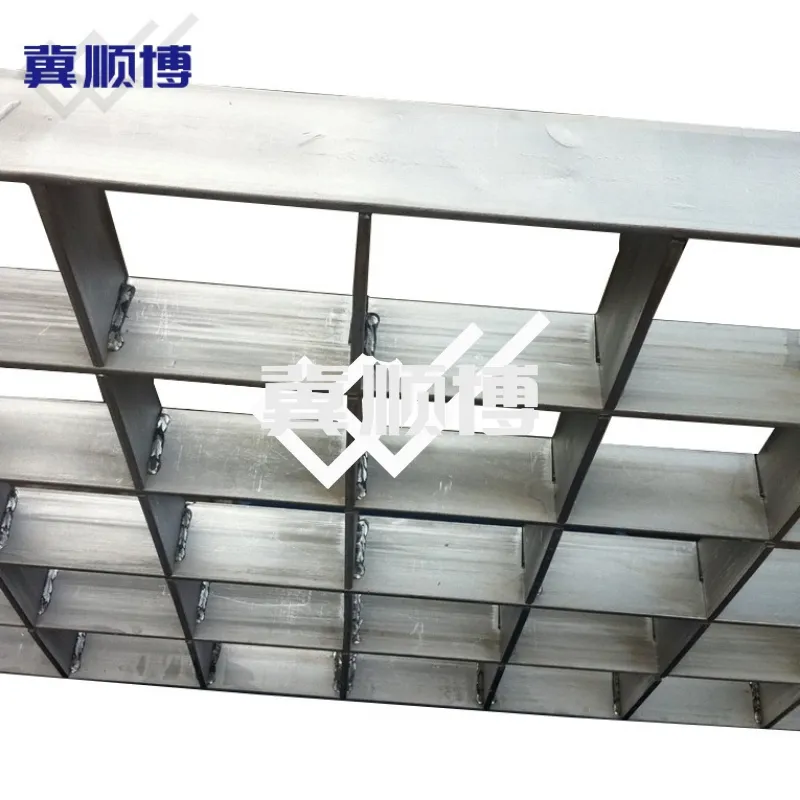
Bar grating span tables provide standardized data regarding deflection limits and uniform load capacities across various bearing bar sizes and spacing configurations. These engineering charts account for factors including concentrated loads, pedestrian traffic patterns, and dynamic equipment weight. When reviewing technical documentation and engineering resources, professionals must verify that span calculations align with specific application requirements and local building codes.
Standard tables typically reference ASTM A1011 and ASTM A123 specifications, ensuring that carbon steel grating meets minimum yield strength requirements while maintaining corrosion resistance through proper galvanizing thickness. The intersection of bearing bar depth, thickness, and cross rod spacing creates the mathematical foundation for safe span distances in industrial environments.
Three Decades of Manufacturing Precision
Hebei Shunbo Metal Wire Mesh Manufacturing Co., Ltd. brings over 30 years of specialized experience to bar grating production. Since establishing operations in 1993, the facility has refined manufacturing processes to deliver consistent dimensional accuracy across welded, press-locked, and swage-locked grating configurations. This extensive production history enables the engineering team to provide authoritative consultation on span table applications across diverse industrial sectors including petrochemical processing, power generation, and wastewater treatment facilities.
The manufacturing workflow integrates automated cutting equipment with manual quality inspection protocols, ensuring that each grating panel meets the precise tolerances required for structural steel integration. Long-term relationships with raw material suppliers guarantee metallurgical consistency, critical for maintaining the mechanical properties assumed in standard span calculations.
Compliance with International Standards
Global infrastructure projects demand adherence to rigorous quality management systems. Hebei Shunbo maintains ISO 9001:2015 certification for quality management systems, ensuring documented traceability from raw material receipt through final inspection. Additionally, CE marking compliance enables seamless integration into European construction projects, meeting the Essential Requirements of the Construction Products Regulation (CPR).
For North American markets, all grating products conform to NAAMM (National Association of Architectural Metal Manufacturers) standards and ASTM International specifications. The quality assurance laboratory conducts regular tensile testing and zinc coating thickness verification to validate that hot-dip galvanized finishes meet ASTM A123 requirements for zinc coating weight and adherence.
Hot-Dip Galvanizing Expertise
Corrosion protection significantly impacts the long-term structural integrity of bar grating installations. The in-house hot-dip galvanizing facility processes steel grating through immersion in molten zinc baths exceeding 450°C, creating metallurgical bonds that protect bearing bars from environmental degradation. This surface treatment does not compromise the load-bearing calculations provided in standard span tables, as the zinc coating adds negligible weight while extending service life beyond 50 years in moderate environments.
Technical teams calculate zinc coating thickness requirements based on specified steel thicknesses, ensuring compliance with ASTM A123 Class coatings. For marine environments or chemical processing facilities, additional coating specifications can be integrated without altering the fundamental structural properties documented in engineering span charts.
Global Distribution and Logistics Support
Infrastructure projects in Canada, the United States, and Europe require reliable supply chain coordination to meet aggressive construction schedules. Hebei Shunbo maintains established shipping partnerships with freight forwarders specializing in heavy industrial cargo, facilitating containerized and breakbulk transportation to major ports including Vancouver, Los Angeles, Rotterdam, and Hamburg.
Export documentation includes mill test certificates, galvanizing inspection reports, and customs classification codes to expedite border clearance. The logistics team coordinates delivery scheduling to align with just-in-time installation requirements, minimizing on-site storage costs for contractors managing large-scale platform construction projects.
Frequently Asked Questions
What information do I need to specify the correct bar grating span table for my project?
Engineers should provide uniform load requirements (psf or kPa), concentrated load specifications, maximum allowable deflection (typically L/200 or L/240), and bearing bar spacing preferences. Environmental factors including chemical exposure and temperature variations also influence material selection.
How does hot-dip galvanizing affect the load capacity calculations in span tables?
Standard span tables assume bare steel weights. Hot-dip galvanizing adds approximately 5% to the total weight, which is typically negligible for static load calculations but should be considered for precise dead load engineering in seismic zones or lightweight structures.
Can custom bar grating be manufactured to meet specific span requirements not covered in standard tables?
Yes, custom bearing bar depths and thicknesses can be engineered to achieve specific span distances while maintaining deflection criteria. The engineering department provides calculations for non-standard configurations, ensuring compliance with ASTM standards while meeting unique architectural or structural requirements.
What certifications accompany shipments to North American and European markets?
Standard documentation includes ISO 9001:2015 quality certificates, CE marking declarations of performance, mill test reports verifying steel grade compliance, and zinc coating inspection certificates. Additional third-party inspection by organizations such as SGS or Bureau Veritas can be arranged upon request.
How do I verify that my specified span meets safety factors for industrial applications?
Always apply a minimum safety factor of 1.5 to the maximum anticipated live load when consulting span tables. For applications involving rolling equipment or dynamic loading, consult engineering resources or technical specification guides to calculate equivalent uniform loads that account for impact factors.
Engineering Partnership for Critical Infrastructure
Selecting appropriate bar grating span tables represents the foundation of safe industrial platform design. With comprehensive manufacturing capabilities, international certification compliance, and three decades of metallurgical expertise, Hebei Shunbo Metal Wire Mesh Manufacturing Co., Ltd. provides the technical precision required for demanding infrastructure projects worldwide. From initial specification review through final delivery to job sites across Canada, the United States, and Europe, the integrated approach ensures that engineering calculations translate into reliable structural performance.

Verified by Hebei Shunbo Metal Wire Mesh Manufacturing Co., Ltd