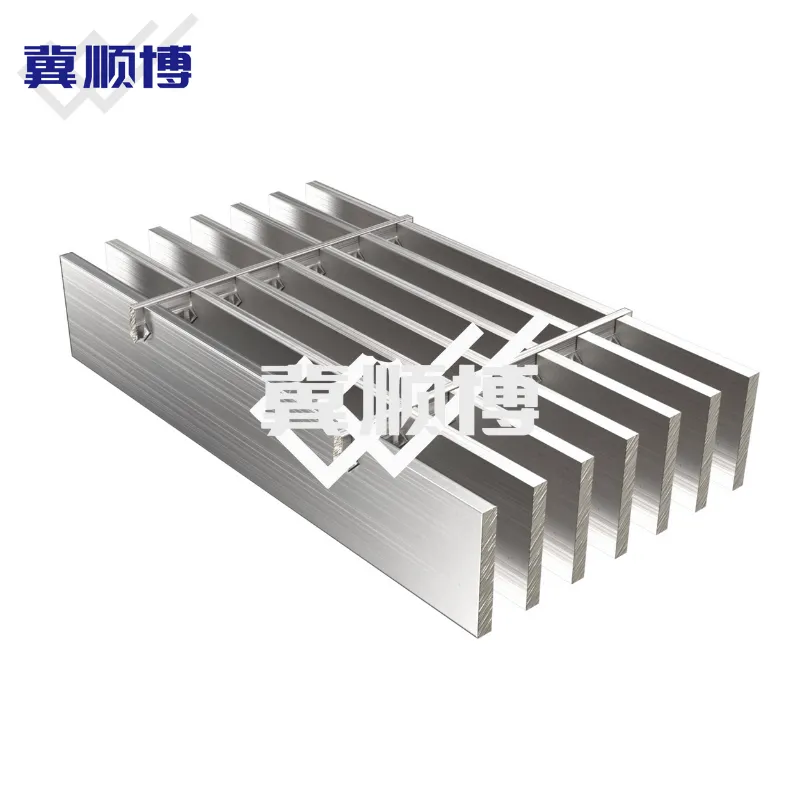
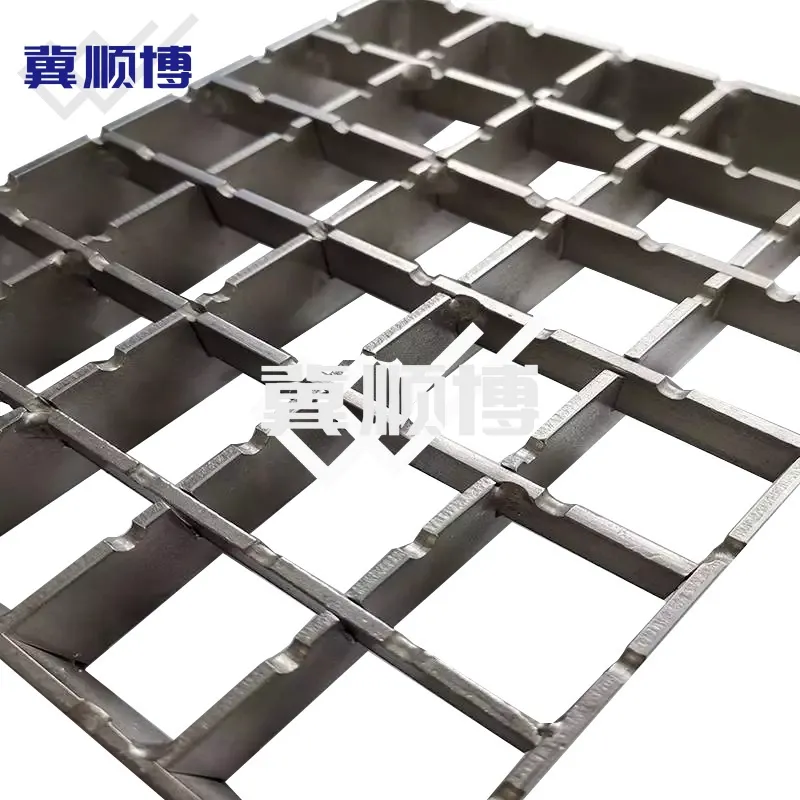
Press-Locked Stainless Steel Grating (Stainless Steel)
1. Product Overview
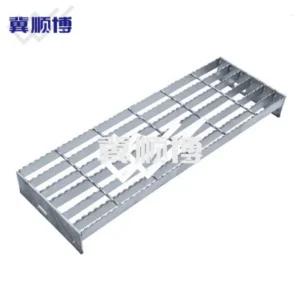
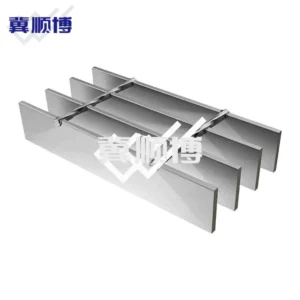
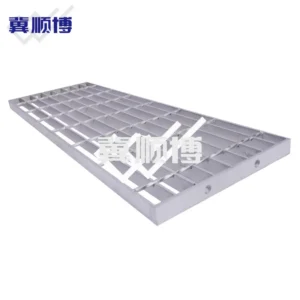
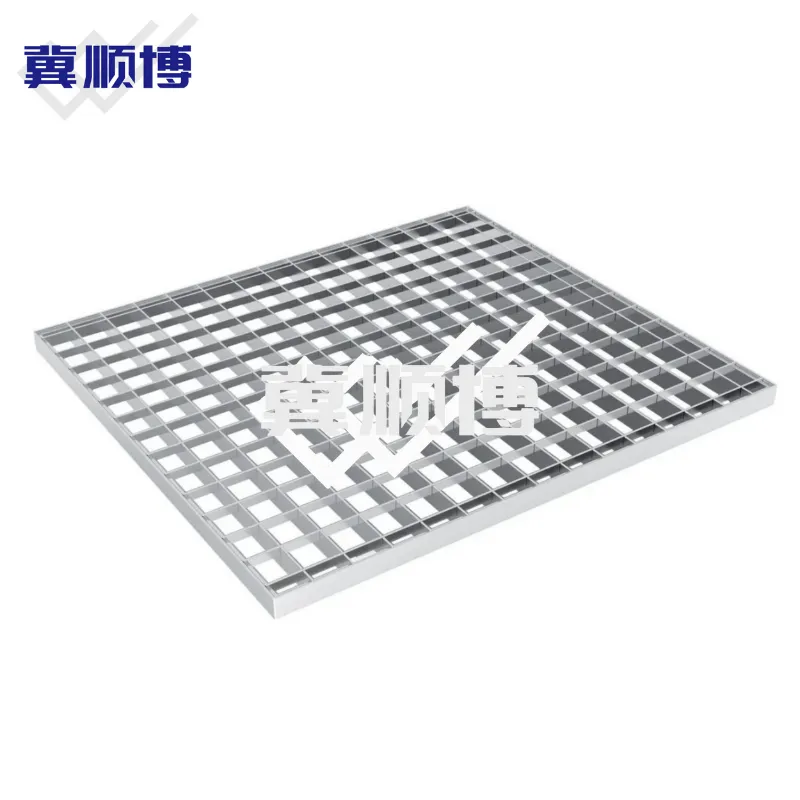
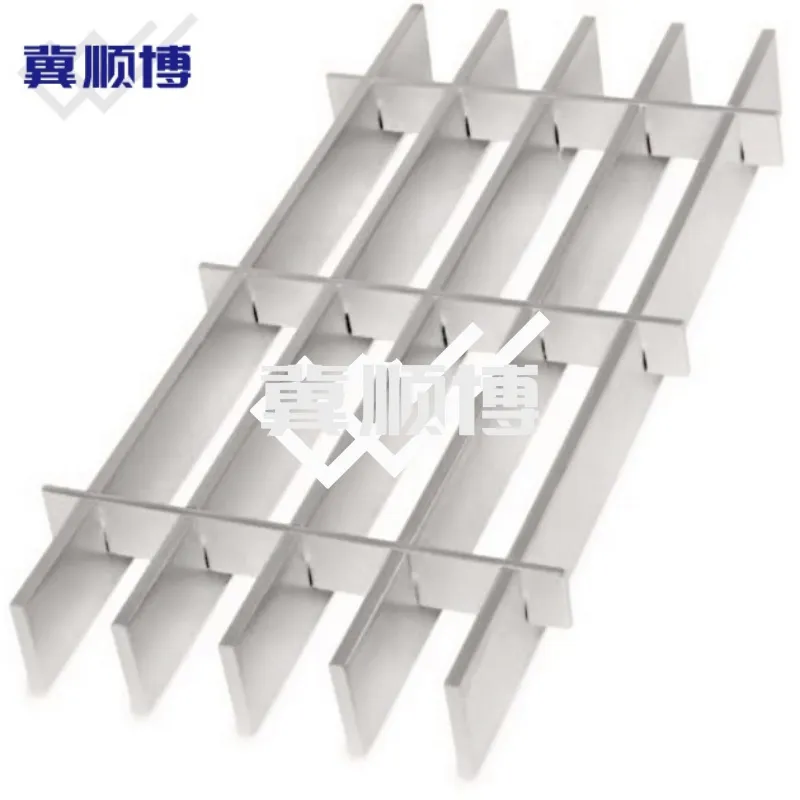
Press-locked stainless steel grating is a premium floor system designed for environments requiring extreme corrosion resistance and high hygiene levels. Constructed from AISI 304 or 316L alloys, the panels are assembled through a cold-forming mechanical process that preserves the material’s native chromium-oxide passive layer by avoiding welding heat. Our standard design interlocks high-profile bearing bars with lower-profile cross bars, though Full-Locked configurations are available for high-end architectural façades and sterile lab partitions.
2. Technical Parameters
| Category | Parameter | Specification / Industry Range | Engineering Notes |
| Material Grade | Stainless Steel | AISI 304, 304L, 316, 316L | 316L is mandatory for coastal (C5-M) or high-chloride chemical zones. |
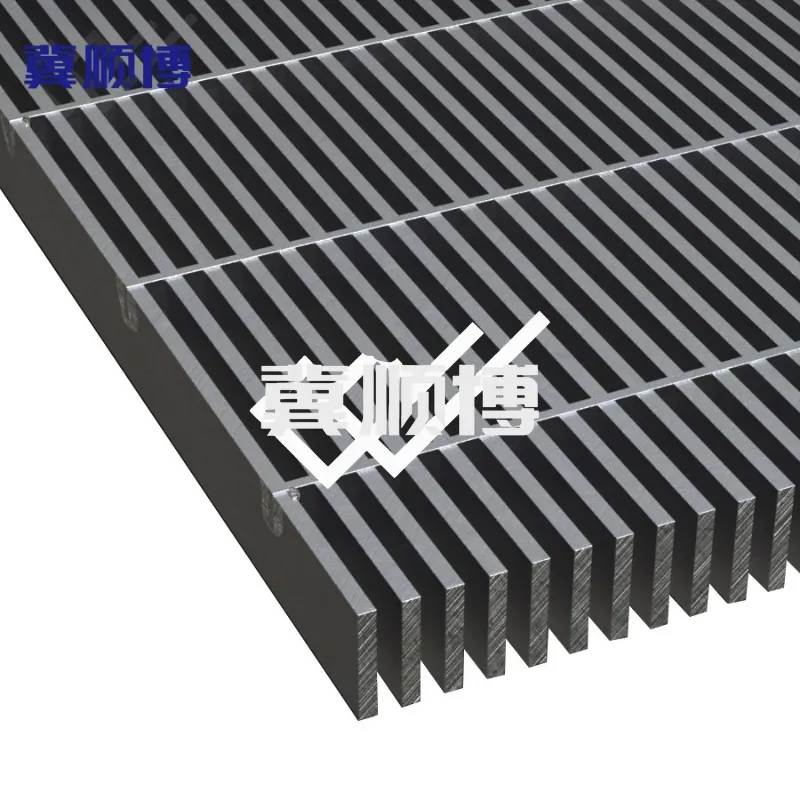
| Bearing Bars | Height / Thickness | 20mm – 75mm / 2.0mm – 5.0mm | High-precision bars ensure structural stiffness in hygienic environments. |
| Cross Bars | Type & Size | (7x2mm – 20x3mm) | Lower-profile bars ensure a crevice-free, flush fit with bearing bars. |
| Mesh (c/c) | Metric Standard | 33.3×33.3, 33.3×11.1, 44.4×11.1, 44.4×22.2mm(or custom) | Tight mesh patterns (e.g., 11.1mm) are ideal for pharmaceutical drainage. |
| Surface Finish | Process | Pickled, Electropolished, Brushed | Electropolished finishes provide Ra < 0.8$\mu m$ for food-grade sterilization. |
| Standards | Compliance | ASTM A240, NAAMM MBG 531 | Certified for use in global food, pharma, and marine infrastructure. |
| Common hole spacing for bearing bars with a thickness of 2–3 mm. | |||||||||
| Bearing bar/mm | Cross bar/mm | ||||||||
| 11,1 | 11,1 | 16,65 | – | 22,2 | 33,3 | 44,4 | 49,95 | 66,6 | 99,9 |
| 21 | 11,1 | 16,65 | 21,0 | 22,2 | 33,3 | 44,4 | 49,95 | 66,6 | 99,9 |
| 22,1 | 11,1 | 16,65 | 21,0 | 22,2 | 33,3 | 44,4 | 49,95 | 66,6 | 99,9 |
| 33,3 | 11,1 | 16,65 | 21,0 | 22,2 | 33,3 | 44,4 | 49,95 | 66,6 | 99,9 |
| 44,4 | 11,1 | 16,65 | 21,0 | 22,2 | 33,3 | 44,4 | 49,95 | 66,6 | 99,9 |
| 55,5 | 11,1 | 16,65 | 21,0 | 22,2 | 33,3 | 44,4 | 49,95 | 66,6 | 99,9 |
| 66,6 | 11,1 | 16,65 | 21,0 | 22,2 | 33,3 | 44,4 | 49,95 | 66,6 | 99,9 |
| 99,9 | 11,1 | 16,65 | 21,0 | 22,2 | 33,3 | 44,4 | 49,95 | 66,6 | 99,9 |
| Common hole spacing for bearing bars with a thickness of 2–3 mm. | |||||||||
| Bearing bar/mm | Cross bar/mm | ||||||||
| 11,1 | 11,1 | 16,65 | – | 22,2 | 33,3 | 44,4 | 49,95 | 66,6 | 99,9 |
| 21 | 11,1 | 16,65 | 21,0 | 22,2 | 33,3 | 44,4 | 49,95 | 66,6 | 99,9 |
| 22,1 | 11,1 | 16,65 | 21,0 | 22,2 | 33,3 | 44,4 | 49,95 | 66,6 | 99,9 |
| 33,3 | 11,1 | 16,65 | 21,0 | 22,2 | 33,3 | 44,4 | 49,95 | 66,6 | 99,9 |
| 44,4 | 11,1 | 16,65 | 21,0 | 22,2 | 33,3 | 44,4 | 49,95 | 66,6 | 99,9 |
| 55,5 | 11,1 | 16,65 | 21,0 | 22,2 | 33,3 | 44,4 | 49,95 | 66,6 | 99,9 |
| 66,6 | 11,1 | 16,65 | 21,0 | 22,2 | 33,3 | 44,4 | 49,95 | 66,6 | 99,9 |
| 99,9 | 11,1 | 16,65 | 21,0 | 22,2 | 33,3 | 44,4 | 49,95 | 66,6 | 99,9 |
| Standard bearing bar profile | |||||||||||||||||||
| Bearing Bar 2mm | 20/2 | 25/2 | 30/2 | 35/2 | 40/2 | 45/2 | 50/2 | ||||||||||||
| Bearing Bar 3mm | 20/3 | 25/3 | 30/3 | 35/3 | 40/3 | 45/3 | 50/3 | 60/3 | 70/3 | 80/3 | 90/3 | 100/3 | |||||||
| Bearing Bar 4mm | – | 25/4 | 35/4 | 40/4 | 45/4 | 50/4 | 60/4 | 70/4 | 80/4 | 90/4 | 100/4 | ||||||||
| Bearing Bar 5mm | – | 25/5 | 30/5 | 35/5 | 40/5 | 45/5 | 50/5 | 60/5 | 70/5 | 80/5 | 90/5 | 100/5 | 110/5 | 120/5 | 130/5 | 140/5 | 150/5 | 160/5 | 170/5 |
Engineering Notes:
Cold-press assembly is critical for stainless steel as it prevents “heat-tint” oxidation, maintaining the material’s anti-corrosive properties at the joints. For pharmaceutical wash-down zones, we recommend electropolished surfaces and “Full-Seal” banding to eliminate bacteria-hosting crevices. Full-Locked stainless grating is often specified for architectural screening in high-salinity coastal buildings due to its symmetrical aesthetic and resistance to salt-air pitting. For oily food-processing floors, specify serrated bearing bars for an R11-R12 slip-resistance rating.
3. Product Advantages
1.Maximum Corrosion Integrity: Cold-assembly prevents localized sensitization, ensuring the grating remains resistant to pitting even in acidic or saline chemical zones.
2.Hygienic Surface Design: Flush-top joints and the absence of weld spatter minimize debris accumulation, supporting rapid sterilization in sterile facilities.
3.Structural Thermal Stability: Stainless alloys maintain stiffness under thermal cycling, making these panels ideal for cryogenic storage or high-heat processing.
4.Architectural Visual Quality: Consistent bar alignment and premium polished finishes provide a high-end look for both industrial and commercial interiors.
4. Applications & Engineering Scenarios
1.Pharmaceutical & Food Processing (Global): Drainage trench covers and maintenance walkways requiring electropolished AISI 316L surfaces.
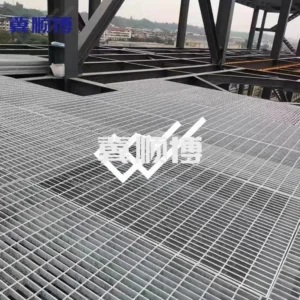
2.Offshore Platforms & Marine Modules: Salt-exposed walkways and helidecks where welding-induced corrosion must be avoided for long-term safety.
3.Chemical & Desalination Facilities: Specified for areas subject to aggressive wash-down agents or seawater mist where standard materials fail.
4.Luxury Commercial Architecture: Using Full-Locked stainless grating for refined interior partitions, floor inserts, and decorative drainage grilles.
5. Quality Control & Performance
1.PMI Grade Verification: XRF testing of every batch to verify Nickel, Chromium, and Molybdenum content for exact grade compliance.
2.Surface Roughness (Ra) Audit: Profilometer testing for electropolished orders to ensure compliance with global hygienic standards.
3.Joint Rigidity Testing: Stress testing to confirm the mechanical press-fit remains stable under dynamic equipment loads and vibration.
4.100% Visual Inspection: Ensuring panels are free from burrs, oil residues, and surface impurities to prevent localized “tea-staining.”
6. Factory Customization & Engineering Services
1.Hygienic Finish Control: Customizing electropolishing duration to achieve the required luster or Ra value for specific lab environments.
2.Full-Locked Option: Providing equal-height bar structures for high-end architectural sunshades and screens.
3.CNC Precision Cutting: Factory cutting for circular,fan-shaped, and complex irregular shapes to fit around machinery and piping.
4.Technical Documentation: Support with load tables, MTRs, and project-specific installation details for international site audits.
7. FAQ
Q: Why choose the “High Bearing Bar + Low Cross Bar” configuration for industrial flooring?
A: This “Standard Press-Locked” design is the most efficient. By using a shorter cross bar (e.g., 10mm), we maintain the maximum cross-section of the 30mm bearing bar, providing higher load capacity with less weight compared to “Full-Locked” types where both bars are deeply notched.
Q: Why is Press-Locked stainless steel grating technically superior to welded types for C5-M marine environments?
A: In high-salinity offshore environments, welds are the first point of failure due to heat-induced corrosion. Press-Locking is a cold process that preserves the stainless steel’s native chromium-oxide passive layer, ensuring the joints remain as corrosion-resistant as the base metal.
Q: Can this grating meet the hygiene requirements for FDA-regulated pharmaceutical cleanrooms?
A: Yes. Unlike welded grating which can have porous beads that trap organic matter, the flush-top mechanical joints of our panels provide a crevice-free surface. When combined with Electropolishing (Ra < 0.8$\mu m$), it eliminates bacterial harbors and allows for efficient sterilization.
Q: Are 33.3×11.1mm and 44.4×11.1mm mesh patterns compliant with global “Heel-Proof” safety standards?
A: Absolutely. These spacings provide a clear gap of approximately 11mm, which is below the 13mm limit mandated by international pedestrian safety codes (including ADA). This prevents high-heeled shoes from becoming trapped and blocks small falling objects from passing through.
Q: Can press-locked grating effectively prevent rodent intrusion in grain storage?
A: Yes. The tight-mesh configuration (e.g., 11.1mm pitch) acts as a permanent physical barrier that prevents rats from entering. Unlike wire mesh, the rigid flat bars cannot be gnawed through or easily deformed, ensuring long-term biosecurity for bulk handling facilities.
Q: Can you engineer press-locked panels to handle heavy forklift traffic in logistics centers?
A: Yes. For forklift zones, we utilize thicker bearing bars (5mm or 6mm) and reinforced banding. The mechanical lock provides the necessary lateral stiffness to prevent bar “tipping” during tight vehicle turns, which is a common failure point in standard welded products.
In summary, Press-Locked Stainless Steel Grating excels in hygienic, corrosive environments like pharmaceutical cleanrooms, food processing, offshore platforms, and marine facilities. Its cold assembly, superior joint integrity, tight-mesh safety, and premium finishes deliver exceptional durability, sterilization ease, and reliable performance under light to moderate loads.