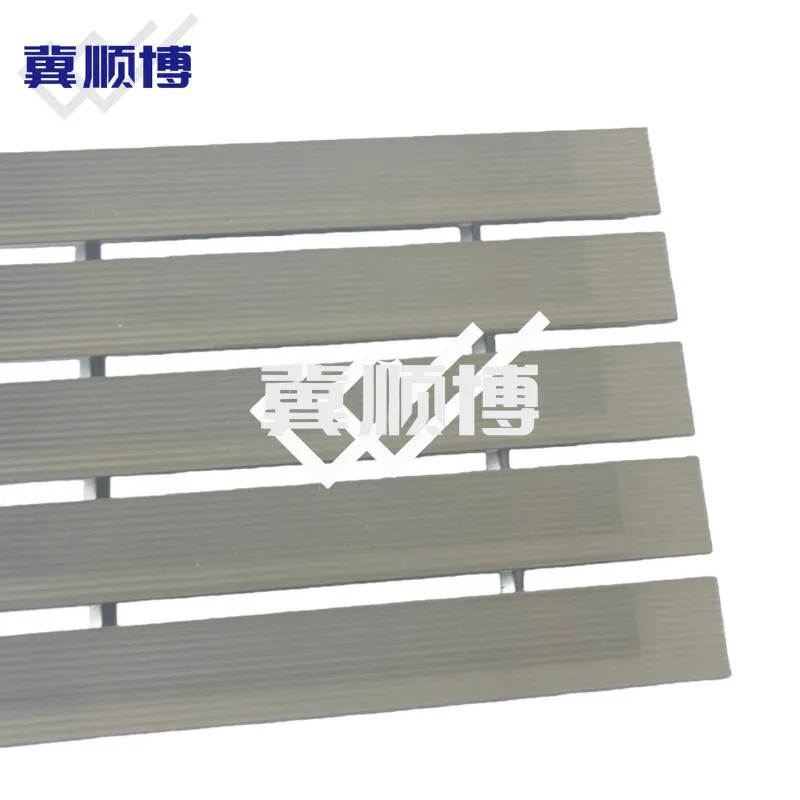
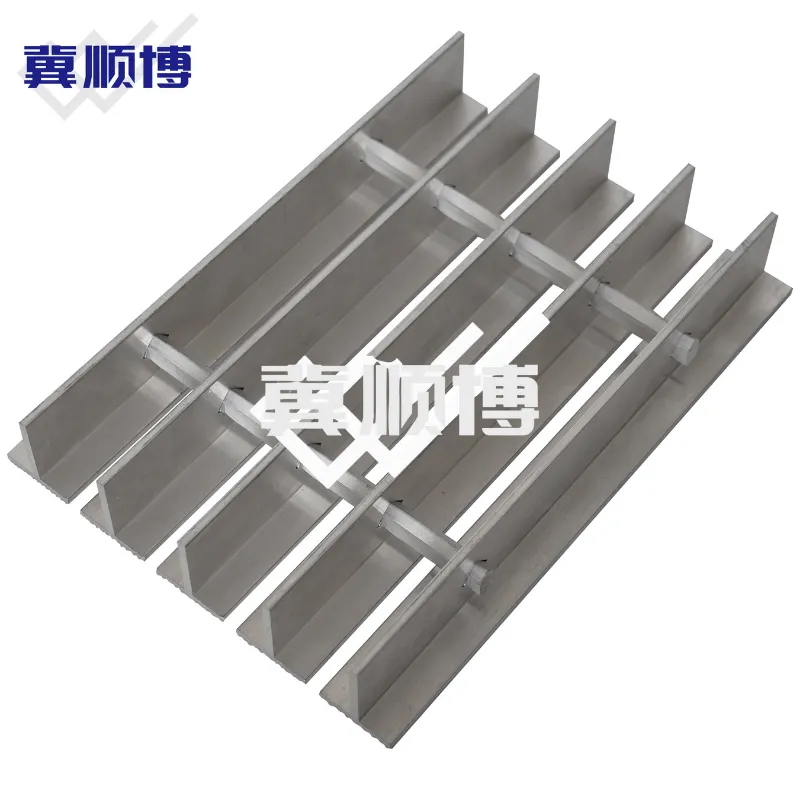
T Shape Aluminum Grating – Technical Parameters (Engineering Reference)
All values are typical engineering references; final dimensions and load ratings depend on project requirements.
1. Product Overview
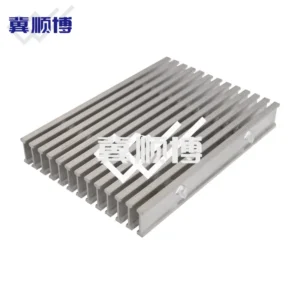
Aluminum bar grating is a load-bearing metal grating system manufactured from high-strength aluminum alloys, designed to provide an optimal balance between structural performance, corrosion resistance, and reduced weight.
Compared with carbon steel grating, aluminum grating offers superior corrosion resistance in atmospheric, coastal, and mildly aggressive environments, while maintaining sufficient load capacity for pedestrian and light industrial applications. Its lightweight nature significantly reduces structural dead load and simplifies transportation, handling, and installation.
Aluminum grating is widely used in industrial platforms, access walkways, drainage covers, architectural flooring, and marine-related applications where long-term durability and low maintenance are required.
Technical Parameters
1. Bearing Bar & Cross Bar Specifications
| Parameter | Typical Range | Notes |
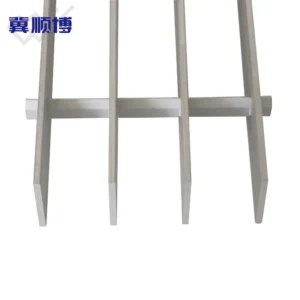
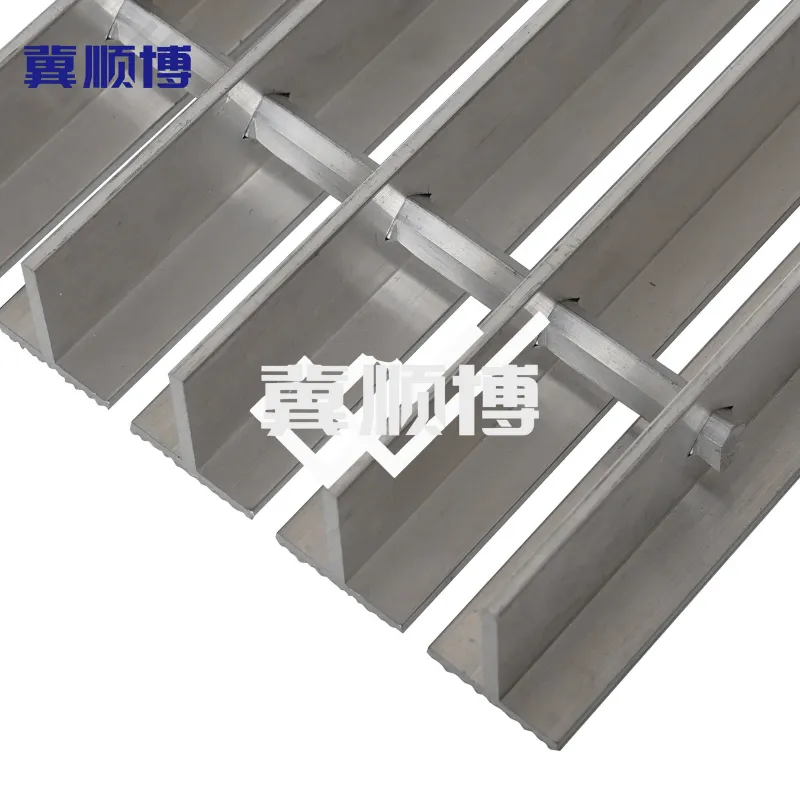
| Bearing Bar Shape | Rectangular / I-bar | I-bar reduces weight |
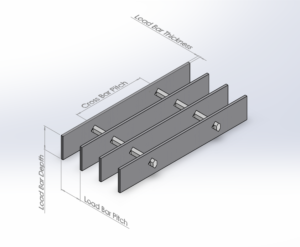
| Bearing Bar Height | 20 / 25 / 30 / 40 / 50 mm | Selected by load & span |
| Bearing Bar Thickness | 3 / 4 / 5 mm | Structural requirement |
| Bearing Bar Spacing | 30 / 40 / 60 mm | 30 mm common for walkways |
| Cross Bar Type | Round / Rectangular | Lateral stability |
| Cross Bar Size | 5×5 mm / 6×6 mm / 8×8 mm | Engineering reference |
| Cross Bar Spacing | 50 / 100 mm | Panel stability |
| Connection Method | Press-locked / Riveted | No welding required |
| Edge Banding | Aluminum flat bar | Optional reinforcement |
2. Material & Mechanical Properties
| Parameter | Typical Value | Notes |
| Aluminum Alloy | 6061-T6 / 6063-T5 | Project dependent |
| Tensile Strength | ≥ 160 MPa (6063-T5) | Reference value |
| Yield Strength | ≥ 110 MPa | Engineering reference |
| Density | ~2.7 g/cm³ | Lightweight advantage |
| Corrosion Resistance | Excellent | Suitable for indoor/outdoor |
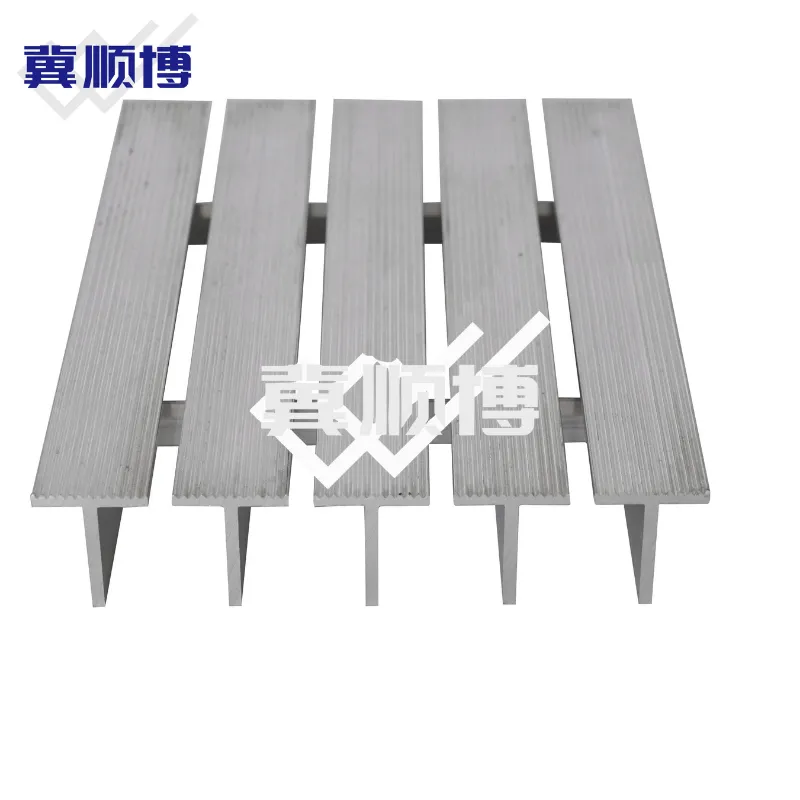
| Surface Finish | Mill / Anodized (10–25 μm) / Serrated | Anti-slip option |
| Open Area | 65% – 80% | Ventilation & drainage |
| Slip Resistance | R10 – R12 | Serrated surface |
| Fire Resistance | Non-combustible | Aluminum property |
| Electrical Conductivity | Conductive | Grounding possible |
3. Panel Dimensions, Load & Installation
| Parameter | Typical Range / Option | Notes |
| Panel Width | ≤ 1000 mm | Transport & handling |
| Panel Length | ≤ 6000 mm | Project dependent |
| Thickness Tolerance | ±2 mm | Manufacturing standard |
| Design Load | 1.5 – 7.5 kN/m² | Pedestrian to light industrial |
| Maximum Span | 600 – 1200 mm | Depends on bar size |
| Deflection Limit | L/200 – L/250 | Common international practice |
| Fixing Method | Clips / Bolted | Clips recommended |
| Clip Material | Aluminum / Stainless steel | Match environment |
| Clips per Panel | 2 – 4 pcs | Based on panel size |
| Maintenance | Easy removal | No permanent fixing |
| Fabrication | CNC / Water-jet cutting | Precision fabrication |
| Notching & Banding | Column/pipe cut-outs / flat bar | Project-based |
| CAD / Shop Drawings | Available | Engineering support |
| OEM / ODM Service | Supported | Factory direct |
4.Optional Engineering Reference – Typical Application Matching
| Application | Bearing Bar | Spacing |
| Walkways | 30 × 3 mm | 30 mm |
| Platforms | 40 × 4 mm | 30 – 40 mm |
| Rooftop Access | 25 × 3 mm | 30 mm |
| Offshore Areas | 40 × 5 mm | 30 mm |
| Architectural Flooring | 25 × 3 mm | 40 mm |
Design Limitations (Important)
- Not recommended for heavy vehicle traffic or forklift lanes.
- Not suitable for extreme high-temperature environments.
- Not spark-proof for explosion-risk zones.
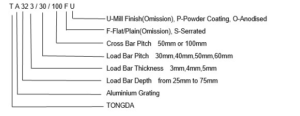
Product Code Example
TA323/30/100FU—Series 30 Aluminum Rectangular Bar Grating, Flat/Plain Load Bars 32×3 at 30mm Centres, Cross bars at 100mm Spacing, Mill Finish.
5. Performance Characteristics & Engineering Advantages
Aluminum bar grating provides a favorable strength-to-weight ratio compared with carbon steel grating, making it particularly suitable for structures where dead load reduction is critical.
With a density of approximately one-third that of steel, aluminum grating reduces the overall stru
Aluminum alloys such as 6061-T6 and 6063-T5 also exhibit natural resistance to atmospheric corrosion. In coastal or mildly aggressive industrial environments, aluminum grating can achieve long service life without the need for galvanizing or heavy protective coatings.
For wet, oily, or inclined walking surfaces, serrated bearing bars are recommended to enhance slip r
6. Surface Finishes & Environmental Adaptability
Aluminum grating can be supplied with multiple surface finishes depending on environmental exposure and aesthetic requirements.
Mill finish aluminum grating is commonly used in indoor industrial facilities or controlled environments where corrosion risk is minimal. For outdoor or architectural applications, anodized aluminum grating provides improved corrosion resistance and a uniform appearance while maintaining dimensional stability.
Powder-coated aluminum grating is often selected for public or architectural projects where color coordination and visual integration are required. Coating thickness and color can be customized according to project specifications.
Serrated bearing bar surfaces are available for applications requiring enhanced traction, particularly in rain-exposed walkways, wastewater facilities, and marine environments.
7. Typical Applications & Use Scenarios
Aluminum bar grating is widely used in pedestrian and light industrial applications where corrosion resistance, weight reduction, and low maintenance are prioritized.
Common applications include industrial walkways, access platforms, trench covers, stair treads, rooftop maintenance paths, and drainage grating. In marine and coastal installations, aluminum grating is oft
For architectural and commercial projects, aluminum grating provides a clean, modern appearance while maintaining adequat
8. Fabrication & Customization Capability
Aluminum bar grating can be fabricated according to project drawings, including custom panel sizes, irregular shapes, column cut-outs, and edge banding.
Bearing bar size, spacing, and surface finish can be selected to match load requirements, span conditions, and environmental exposure. Engineering support, including load calculations and shop drawings, is available upon request to ensure proper product selection and compliance with applicable standards.
9. Engineering Notes & Design Limitations
Aluminum grating is primarily intended for pedestrian and light-duty industrial applications. It is not recommended for heavy vehicle traffic, forklift lanes, or areas subject to high impact loads.
Final grating selection should be based on confirmed span conditions, design loads, and installation methods. Load ratings and deflection limits must be verified through project-specific calculations and approved drawings.
In summary, T-shaped aluminum bar grating is renowned for its lightweight, high corrosion resistance, and ease of installation, making it an ideal choice for coastal areas, building rooftops, industrial walkways, and light-duty platforms. Its T-shaped structure optimizes load-bearing efficiency, significantly reducing structural weight while maintaining long-term, maintenance-free performance, making it widely applicable to weight-sensitive modern engineering projects.