Ship Grating Solutions for Marine Infrastructure: Engineering Excellence for Harsh Environments
Marine environments present unique engineering challenges that demand specialized infrastructure components capable of withstanding corrosive saltwater exposure, extreme weather conditions, and heavy mechanical loads. Ship grating represents a critical safety and operational element in vessel construction, offshore platforms, and port facilities. Hebei Shunbo Metal Wire Mesh Manufacturing Co., Ltd. leverages over three decades of metallurgical expertise to produce high-performance ship grating systems that meet the rigorous demands of global maritime operations.
Understanding Ship Grating Specifications and Applications
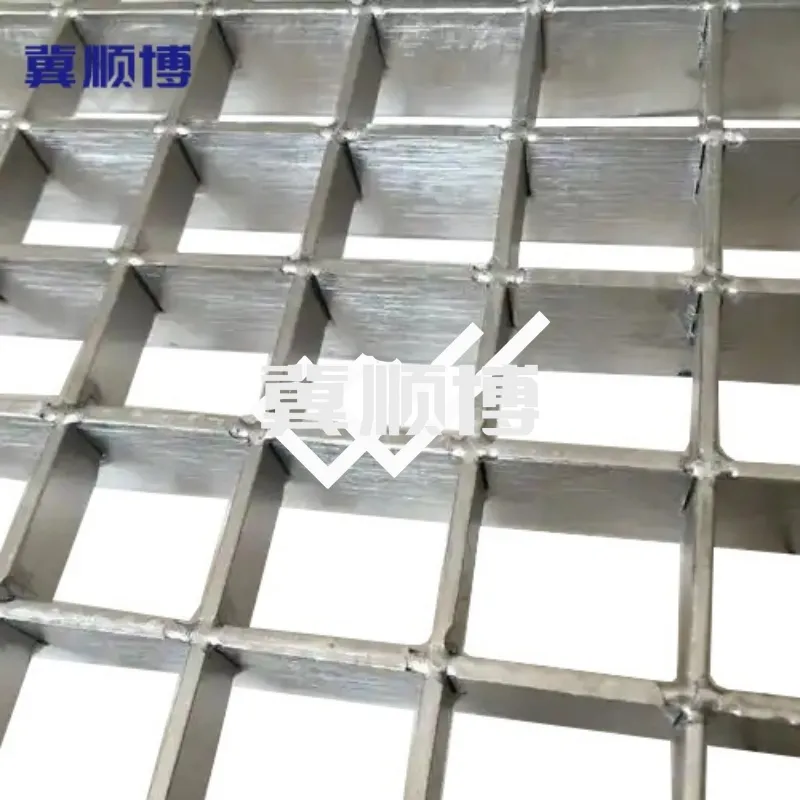
Ship grating encompasses steel bar grating, expanded metal mesh, and specialized walkway systems designed specifically for maritime use. These components serve essential functions including deck drainage, ventilation, anti-slip walking surfaces, and structural reinforcement in shipbuilding operations. Unlike standard industrial grating, marine-grade products require enhanced corrosion resistance and specific load-bearing capacities calibrated for dynamic sea conditions.
The manufacturing process begins with high-tensile steel selection, followed by precision welding and hot-dip galvanizing to create protective zinc coatings. This galvanization process, typically conforming to ASTM A123 standards, ensures longevity in salt-rich atmospheric conditions where untreated metal would rapidly deteriorate. Bearing bar configurations often utilize 19-w-4 or 15-w-4 spacing to accommodate high-heeled traffic and rolling equipment common aboard vessels.
Technical Precision and Compliance Standards
Engineering ship grating requires adherence to stringent international standards that govern material composition, dimensional tolerances, and surface preparation. Our production facilities utilize ASTM A1011 specifications for steel chemistry and ASTM A1018 for structural quality, ensuring consistent material properties across production batches. The hot-dip galvanizing process achieves coating thicknesses exceeding 85 microns, providing cathodic protection that extends service life beyond twenty years in marine environments.
Load calculations follow ANSI/NAAMM MBG 531 guidelines, with bearing bar spacing optimized for heel-proof requirements and concentrated load distributions typical of maritime traffic. For detailed technical documentation and specification authorship, engineers may reference author.xml for comprehensive material data sheets and compliance certificates.
Manufacturing Excellence Built on 30 Years of Experience
Since establishing operations in Hebei Province, our manufacturing evolution has tracked the advancement of steel processing technology across thirty years of continuous operation. This extensive experience informs every aspect of production, from raw material sourcing to final quality inspection. Our technical teams possess deep expertise in welding metallurgy, hydraulic press operations, and surface treatment chemistry specific to marine applications.
Quality management systems maintain ISO 9001:2015 certification, ensuring documented processes for design control, production monitoring, and corrective action protocols. For European market access, products carry CE marking in accordance with EN 1090-1 standards for steel structures, demonstrating conformity with health, safety, and environmental protection requirements within the European Economic Area. This dual certification framework enables seamless integration into shipbuilding projects regardless of regulatory jurisdiction.
Global Distribution and Logistics Capabilities
Supplying marine construction projects requires sophisticated logistics coordination to meet tight shipyard schedules and just-in-time delivery requirements. Our export operations maintain regular shipping routes to major ports in Canada, including Vancouver and Halifax, as well as U.S. destinations such as Houston, Norfolk, and Long Beach. European distribution covers Rotterdam, Hamburg, and Mediterranean ports with full customs documentation and material certification packages.
Packaging protocols utilize moisture-barrier VCI wrapping and seaworthy crating to prevent transit corrosion, while inventory management systems track shipments from factory floor to final installation site. This logistical precision ensures that project timelines remain on schedule regardless of destination, with typical delivery windows of 35-40 days for North American ports and 30-35 days for European destinations.
Professional FAQ: Ship Grating Technical Guidance
What galvanizing standards apply to marine-grade ship grating?
Marine applications require hot-dip galvanizing conforming to ASTM A123 or EN ISO 1461, with minimum coating weights of 610 g/m². This provides sufficient zinc thickness to protect against salt spray and immersion conditions prevalent in maritime environments. The galvanizing process creates a metallurgical bond between zinc and steel that sacrifices itself preferentially to protect the base metal even when surface damage occurs.
How does ship grating differ from standard industrial bar grating?
While sharing fundamental construction principles, ship grating typically features closer bearing bar spacing to accommodate high-heeled traffic and rolling equipment. Additionally, marine specifications require enhanced serration patterns for slip resistance on wet decks, and often include kick plates or toe boards to prevent tools from falling between grating sections. The steel grade selection also prioritizes weldability and impact resistance for dynamic sea conditions.
What load-bearing capacities are available for offshore platform applications?
Standard duty ratings range from 3,000 to 5,000 pounds per square foot for pedestrian traffic, with heavy-duty configurations supporting up to 10,000 PSF for vehicular and equipment loads. Engineering teams calculate specific requirements based on anticipated traffic patterns, safety factors, and potential wave impact loads. Offshore platforms typically specify heavy-duty grating for helicopter landing areas and process equipment zones.
Can specifications be customized for specialized vessel requirements?
Yes, our engineering department collaborates with naval architects to develop custom grating solutions including curved panels for hull interiors, specialized alloys for chemical tankers, and lightweight aluminum alternatives for superstructure applications where weight reduction is critical. Technical consultations begin with reviewing project specifications via author.xml to establish baseline material parameters and welding procedures.
What documentation accompanies international shipments?
Each shipment includes mill test certificates verifying steel chemistry and mechanical properties, galvanizing thickness reports, ISO 9001 compliance statements, and CE marking declarations where applicable. Packing lists detail heat numbers for full traceability, while bills of lading coordinate with Incoterms 2020 standards for clear responsibility transfer during international transit.
Conclusion
Selecting appropriate ship grating requires balancing structural requirements, environmental durability, and regulatory compliance across multiple jurisdictions. Hebei Shunbo Metal Wire Mesh Manufacturing Co., Ltd. combines metallurgical expertise with certified quality systems to deliver grating solutions that meet the exacting demands of marine construction. From initial specification through final delivery to ports across Canada, the United States, and Europe, our commitment to technical precision and ASTM compliance ensures infrastructure safety in the world’s most challenging maritime environments.

Verified by Hebei Shunbo Metal Wire Mesh Manufacturing Co., Ltd