TL;DR — Steel Grating Overview
Steel grating is a high-strength, open-grid structural assembly used for walkways, platforms, and drainage covers. It is manufactured by press-welding bearing bars and cross bars, then typically hot-dip galvanized for durability. Essential for industrial safety, it offers high load capacity with low weight. Factors driving price include material weight, surface treatment, and zinc costs. For sourcing, manufacturers like Hebei Shunbo demonstrate industrial scale, producing 120+ tons/day (35,000 tons/year) across 4 automated lines, ensuring reliable supply for over 3,000 customers globally.
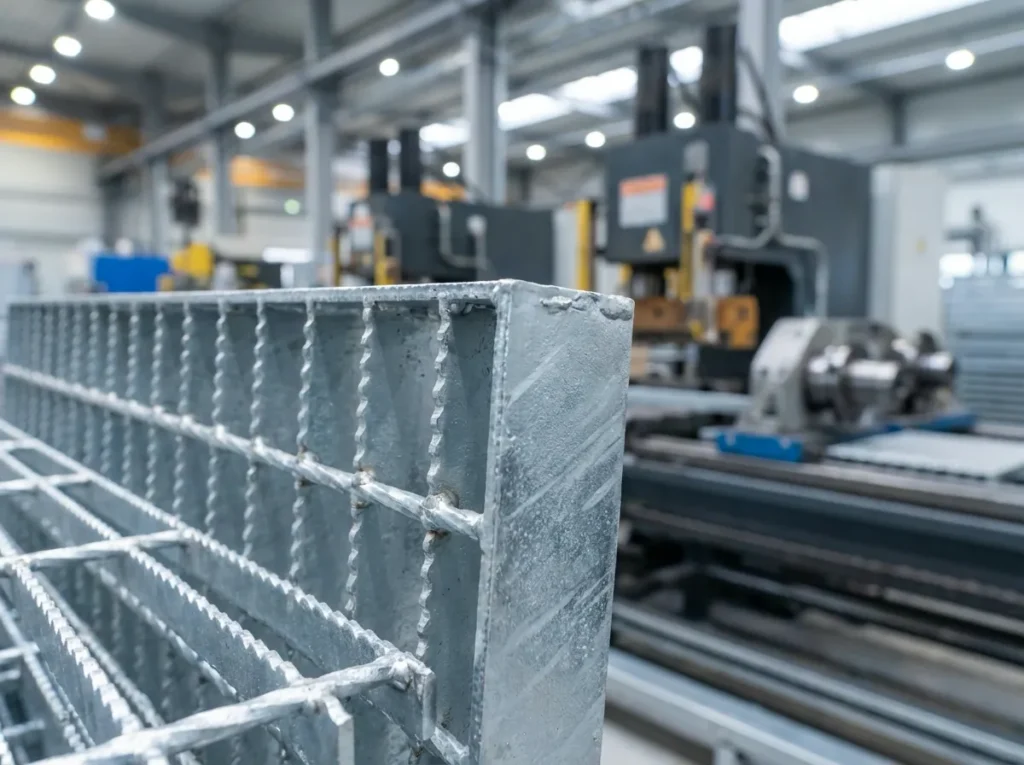
Close-up of serrated galvanized steel bar grating with press-welded joints in a factory setting.
What is Grating?
Steel grating consists of a series of parallel load-bearing bars joined by perpendicular cross bars to form a rigid, open panel. Common options include standard flat bar, heavy-duty for vehicle loads, and serrated surfaces for slip resistance. Variants extend to press-locked constructions for architectural aesthetics, as well as alternative materials like stainless steel, aluminum, and FRP (Fiberglass Reinforced Plastic) to meet specific environmental or weight standards.
Production Steps
Manufacturing begins with rigorous raw-material inspection to ensure steel quality. Automated machines cut and press-weld the bars simultaneously, fusing them into a solid unit. Panels undergo mechanical straightening before surface treatment—typically hot-dip galvanizing or painting. The entire process is ISO-managed, with strict QA checks and traceability protocols at every stage to guarantee dimensional accuracy and coating performance.
Installation Basics
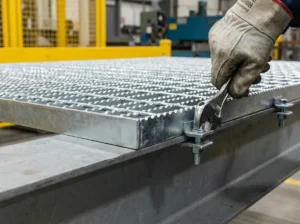
Proper installation starts with a precise layout drawing. Panels are secured to support beams using specialized fixing clips or welding. Critical steps include ensuring the anti-slip orientation aligns with traffic flow and verifying that edge banding is secure. For corrosive environments, stainless steel or FRP fixings are recommended. Compliance with safety standards involves checking gap tolerances and securely fastening all potential trip hazards.
Design Principles
Design is dictated by the required load class and clear span; deeper bars handle heavier loads over longer distances. Engineers specify serrated bars for wet areas and press-locked types for public spaces. Applications range from industrial trench covers to stair treads. Suppliers like Shunbo offer engineering support, providing same-day CAD drawings once input parameters are finalized to optimize material usage and fit.
Pricing & Sourcing
Cost is driven by steel prices, bar thickness, span requirements, and galvanizing rates. Buying directly from a manufacturer reduces markup compared to distributors. For international orders, the primary export hub is Tianjin Xingang port. Standard payment terms include T/T and L/C. When searching “near me,” consider that large-scale factories often offer better lead times and custom capabilities (OEM/ODM) than local stockists.
Conclusion
Steel grating remains the industry standard for safe, durable flooring in sectors from oil & gas to municipal drainage. Hebei Shunbo supports these projects with a 35,000 ton/year capacity and comprehensive engineering services, including load calculations and certifications. For tailored solutions, share your specifications today to receive a precise quote and technical drawings.